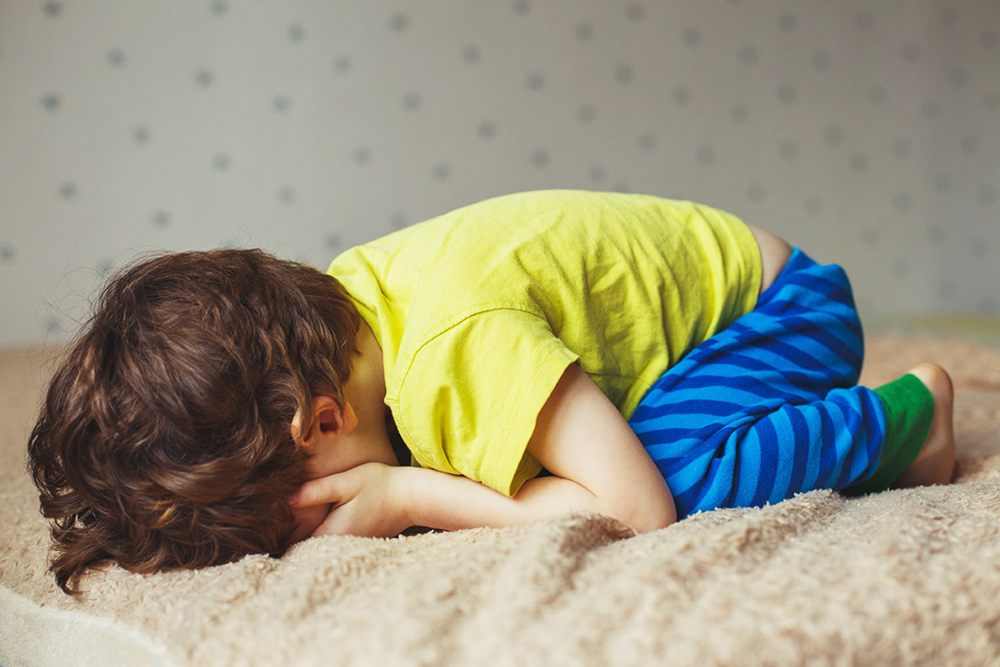
We are all going through an uncertain and quite challenging period that we have never experienced before. We were forced to stay at home due to the pandemic and encountered a lifestyle we were not used to at all. Young people and children were the most affected by this situation. Fear, anxiety, low tolerance or sadness experienced during this period are completely natural reactions. The most prominent reaction we gave during this period was anxiety. Actually, just as we argue that anxiety experienced at a certain level in normal life is positive, we can say that the controlled anxiety experienced now is also positive. The reason for this is that even if emotions are negative, if anxiety is not felt, measures will not be taken because they tell us to do what is necessary.
If you allow the child to reflect their anxiety, they feel that they are not alone, so knowing that they will be protected even if there is a dangerous situation eliminates the anxiety brought by uncertainty. If they do not grow up in a family that allows them to reflect their anxiety, different behavioral problems may be seen in the child. The most common behaviors are exhibiting behaviors below their age (such as pacifier, not wanting to sleep alone). In addition, families started to complain that their children, whose routines were disrupted, were bored because they were at home all day and had difficulty constantly producing something. Actually, the problem starts at this point. Boredom is not actually a need to be met.
Parents want their children to be creative, but when they place an activity every hour, they do not actually create an environment that supports their creativity. Because the structured games we present to them cannot develop the productive aspects of children. Yes, games are important, but it is necessary to create some free play space for them. In addition, it is necessary to support this situation so that they can develop coping mechanisms with problems in their future lives. Another issue that families complain about is the increase in screen time with distance education. Screen time, which we determine according to each age group in normal times, can often be exceeded during the pandemic period. While some children easily adapt to distance education, some have difficulty seeing it as school or lessons. In this case, the task that families should undertake is to prevent their children from evaluating this process as a holiday. Establishing a routine inside the house will both facilitate adaptation to education at home and limit screen time. Repeated routines and a daily program are a source of order for families and adaptation and trust for children. If we can turn our daily plans into a routine, this situation will be easier. Most importantly, if it is emphasized that schools are not closed but closed as a precaution, the adaptation period will be overcome in a shorter time when returning to school.
Finally, it is useful to remind children that there is uncertainty but you are not in control.
In pandemic psychology, it must be accepted that; 'Since we cannot change this, we must accept it'. In this case, no matter what, you need to make your child feel your unconditional love so that we can greatly reduce anxiety.